Project Background
A condominium owner had experienced recurring water leakage through the kitchen ceiling near the center of the building floor plate.
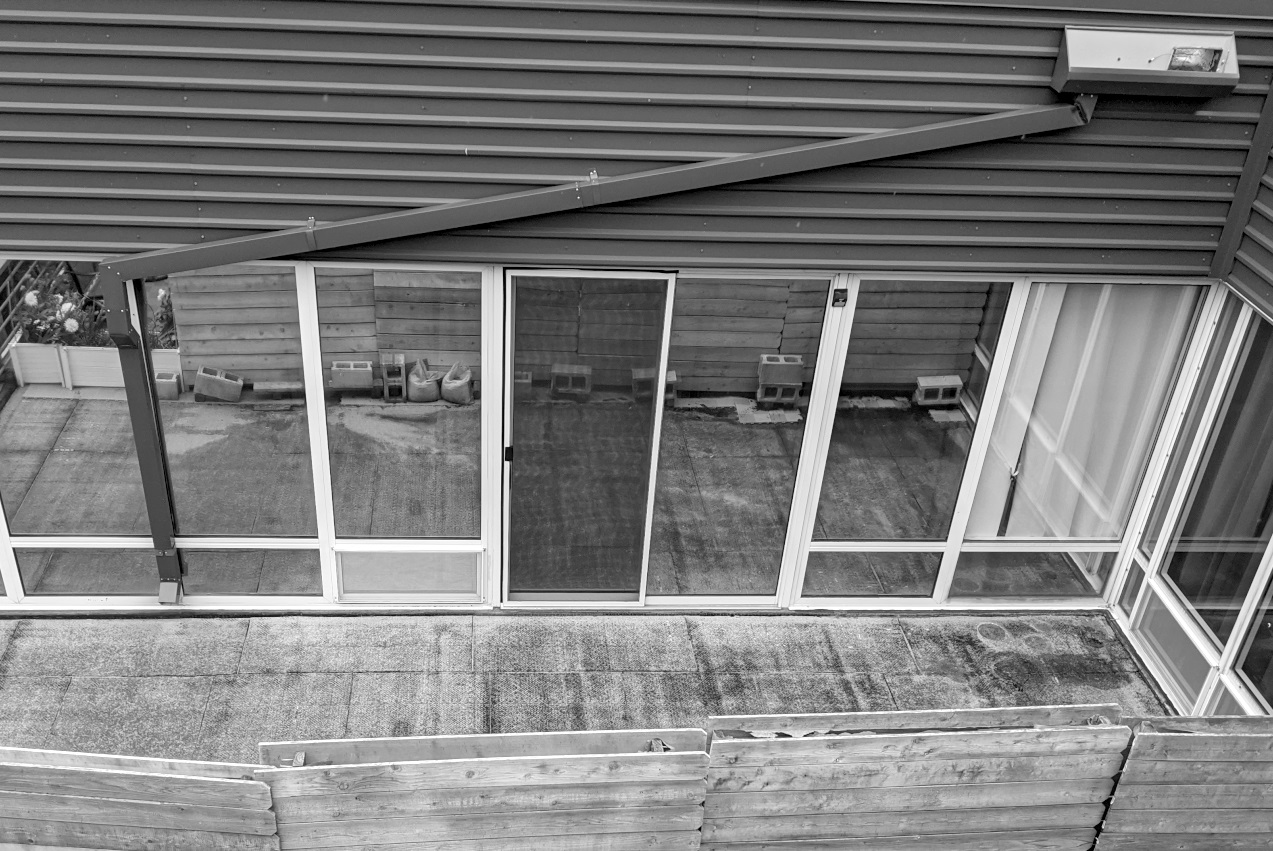
The apparent location of the leak naturally directed attention to the penthouse roof and terrace construction above. Over a period of years, substantial effort was made to address the problem.
Previous work reportedly included multiple roof inspections, localized roof repairs, re-caulking of penthouse fenestration, and eventual replacement of the penthouse roof assembly.
The leak persisted.
By the time Hightower Labs was contacted, the problem had survived multiple repair campaigns and significant expense without a verified source.
^ Back to Top
Repair Without Source Verification
The prior efforts were not necessarily unreasonable. Each addressed building components that could plausibly contribute to leakage based on the location of the interior symptom.
The difficulty was that the location where water became visible inside the building did not reveal where water was entering the enclosure.
Without establishing the actual water-entry point and migration path, successive repairs continued to address suspected sources rather than a verified failure mechanism.
When the source of a leak has not been verified, additional repair work can become increasingly expensive without addressing the actual water-entry path.
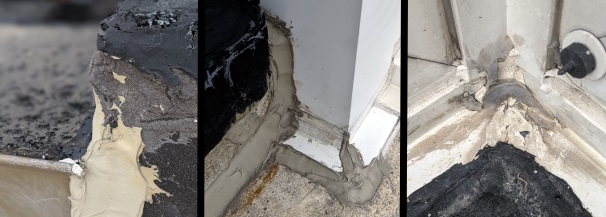
Hightower Labs was engaged to conduct a targeted, forensic leak investigation and provide actionable recommendations.
^ Back to Top
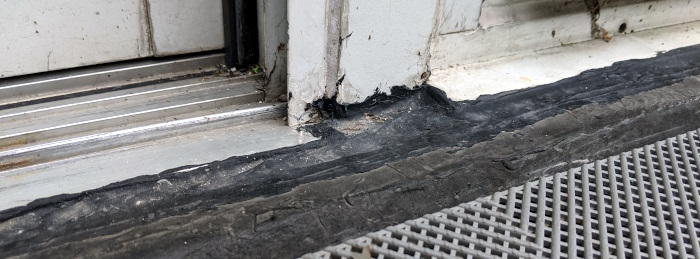
Where Could the Water Be Coming From?
Hightower Labs reviewed the project history, available photographs, and previously completed repair work before mobilizing for a one-day diagnostic investigation.
This review established an understanding of the relevant enclosure construction and helped identify conditions warranting further evaluation.
Rather than assuming that the remaining source was directly above the kitchen, the investigation considered the potential for water to enter elsewhere in the penthouse enclosure and migrate through concealed construction before appearing at the reported interior location.
Targeted testing of plausible sources near the reported leak did not reproduce the interior leakage.
Targeted water testing ultimately identified a water-entry condition at the penthouse parapet and coping.
^ Back to Top
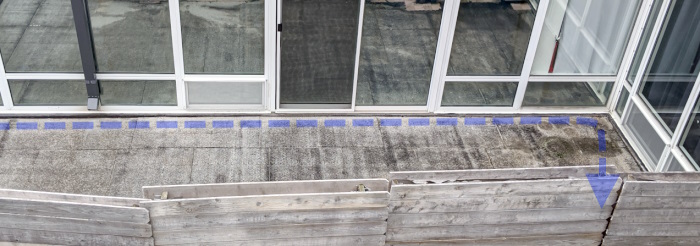
The Water Path
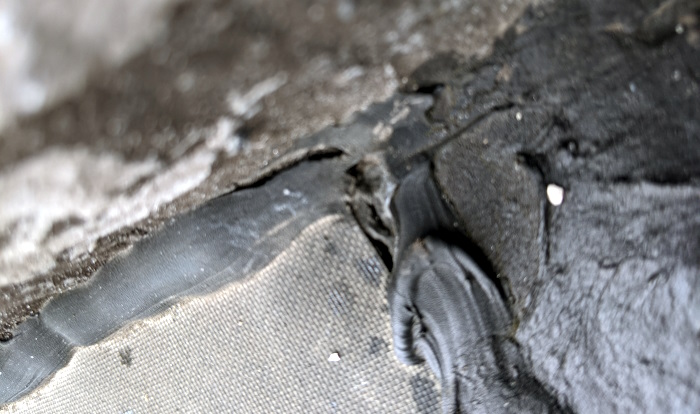
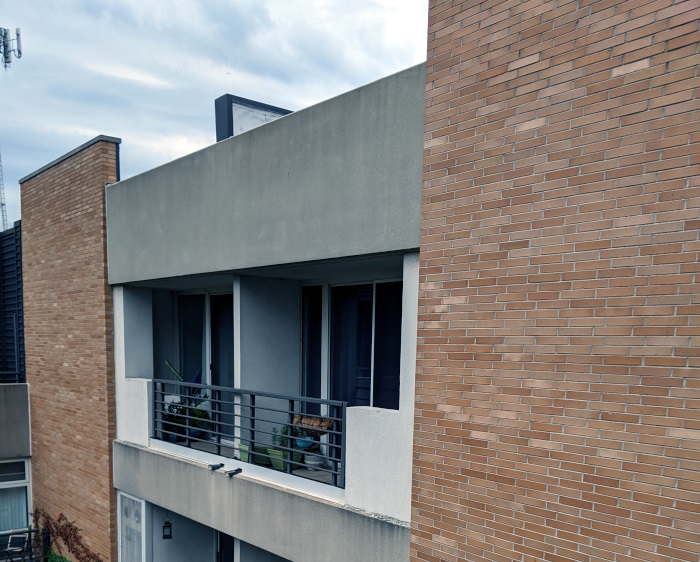
Water entering the enclosure at the penthouse parapet was able to access concealed construction above the structural roof slab and migrate laterally across the terrace assembly.
More than 40 feet from the exterior entry location, the water encountered a pathway into the occupied space below and ultimately appeared at the kitchen ceiling.
Identified Migration Path
- Parapet water entry
- ↓
- Concealed migration through roof / terrace construction
- ↓
- More than 40 feet of lateral travel
- ↓
- Interior leakage at kitchen ceiling
The water was not simply passing vertically through the roof immediately above the affected ceiling.
It was entering at the building perimeter, migrating through concealed roof and terrace construction, traveling across the assembly, and only then finding a route into the occupied space below.
 ^ Back to Top
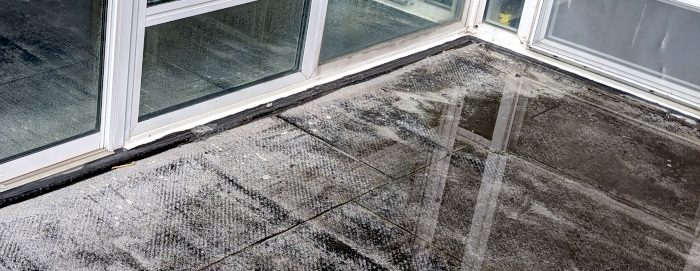
Nothing about the interior symptom pointed directly to the actual source.
The observed leakage was:
- near the center of the floor plate
- more than 40 feet from the identified exterior water-entry location
- separated from that source by multiple concealed construction layers
- still occurring after extensive roofing, sealant, parapet, and coping work had already been performed
Targeted testing of plausible sources near the reported leak did not reproduce the interior leakage.
The eventual finding required separating the location of the symptom from the location of water entry.
That distinction changed the investigation.
^ Back to Top
The Value of Diagnostic Leak Investigation
This case demonstrates a fundamental challenge in building enclosure troubleshooting:
The location where water becomes visible may have little relationship to the location where it entered the building.
Visual inspection and repair of plausible problem areas can be appropriate first steps. But when leakage persists after repeated repairs, continued remediation without source verification can become costly and ineffective.
At that point—or before capital-intensive remediation is undertaken—the objective should shift from:
“What should we repair next?”
to:
“Can we demonstrate how the water is getting in?”
Hightower Labs uses targeted water testing, building enclosure analysis, and controlled diagnostic methods to identify water-entry sources and understand how water moves through concealed assemblies.
In this case, a one-day investigation identified a concealed water path extending more than 40 feet from the exterior entry point to the reported interior leak.
Persistent leaks demand real solutions. Contact Hightower Labs for expert leak investigation & building envelope consulting.
^ Back to Top